Beyond Conscious Design
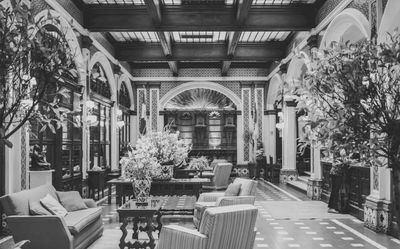
Using PhD-led Narrative Inquiry and Spatial Psychology to lower "Biological Tax"
Narrative Site Intelligence (NSI)™
Foundational Intelligence for Phase 0. Architecture often ignores the "Psychological DNA" of a place. NSI uses deep ethnography to capture the stories and unconscious needs of a community before design begins.
Result:
De-risks projects by ensuring authentic alignment, community buy-in, and measurable Social Value.
The Sanctuary Audit™
Restoring High-Performance Environments. For Sport and Business. A clinical diagnostic that identifies "Pathological Nodes" and "Environmental Friction" in existing facilities.
Result
A Psych Spec and CNS Recovery Memo—actionable modifications to lower cortisol and increase vitality without structural rebuilds.
Psychological Associate

Audit, Support, and Specification
I work as a Psychological Associate alongside lead architects and developers. Whether at the Design Stage or the Remedial Stage, my goal is to ensure the building is a healthy, nourishing partner in the lives of those who inhabit it.
ARCHITECTURE AS MEDICINE

The Clinical Case for Neuro-Spatial Integration (NSI™)
By Dr Peter Sear (PhD, CPsychol)
“The most sustainable thing we can build is a place where people feel they belong. I provide the science that proves they do.”
The Vision: Beyond the Aesthetic
Modern urbanism often treats the built environment as a passive container for human activity. Psychology tells a different story: The environment shapes the activity. Every space we inhabit functions as a continuous psychophysiological intervention. It is either a Biological Sanctuary that restores our cognitive resources or a Biological Threat that chronically drains them. Architecture is not merely a background; it is a primary driver of our internal state.
The Core Conflict: The Biological Tax
When a workspace, school, or home is high-friction and sterile, or narratively disconnected from its site, the human nervous system pays a Biological Tax. This manifests through measurable psychological and physiological influences:
- Cognitive Fatigue: The brain must exert significantly more effort to maintain stability and focus, in poorly designed environments.
- Systemic Volatility: Chronic "Environmental Friction" triggers a sustained stress response, leading to a breakdown in social cohesion and empathy in the environment.
- The Performance Gap: This tax manifests as human error, burnout, and operational loss, as the body’s resources are diverted toward managing environmental stress rather than the task at hand.
The Solution: Phase Zero™ Diagnostics
Sustainability has long focused on the "Carbon Cost" of a building. Phase Zero™ introduces the "Human Cost." By integrating psychological research into the design phase, we ensure that a structure is psychologically and physiologically "fit for purpose" before construction begins.
The Three Pillars of Spatial Narrative
- Narrative Site Intelligence™ (NSI) Architecture is the continuation of a site’s history and meaning. Every location has an Emotional DNA, a memory of the people and events that preceded the current build and what a place means to people. We uncover this narrative to ensure the new design resonates with the subconscious of the community, nurturing an immediate sense of belonging and alignment.
- Materiality as Therapy The physical touchpoints and sensory qualities of a building are its "soft tissues." In a clinical context, these elements act as Neuro-Spatial tools. They signal safety to the amygdala, lowering cortisol levels and creating a sanctuary where the human system can thrive. This choice of material and form is a direct psychophysiological intervention.
- Clinical Governance & Risk Mitigation By identifying "Friction Points" early, we mitigate long-term liability. We move the 'Social' pillar of ESG from a qualitative story to a forensic, researched diagnostic. This provides the "Evidence Base" that modern investors, insurers, and regulators now require to prove a building supports human health.
The Strategic Objective
To build a world where architecture acts as a Biological Sanctuary, protecting the human spirit, restoring cognitive clarity, and ensuring that our cities are built for the preservation of human potential.
Book an Exploratory Session

Ready to understand what your space is telling your unconscious mind?
Email me at with 'Spaces in the subject line. Click below:
Please include in your email:
- What is the project?
- Is it commercial or residential?
- What feels wrong about your current space?
- Whether you're renovating, building, or just moved?
- Your preferred session dates/times/location, online or in person?
Your Home

Why does your expensive, beautifully designed space still feel wrong, and what is your unconscious is trying to tell you about it? We need to feel aligned with the spaces we spend time in. They have to serve our conscious and unconscious needs.
The Problem

Home Design
Disappointment
Disappointment
Most people design homes for who they think they should be. The open-plan Instagram aesthetic. The minimalist dream. The 'perfect' space that somehow feels all wrong. Your unconscious is screaming and you don't know why.
Disappointment
Disappointment
Disappointment
You've invested in good design. You've followed the advice. But something fundamental is missing. Your space doesn't give you permission to be all of who you are. Instead of feeling relaxed, you feel stressed.
Understanding
Disappointment
Understanding
That discomfort isn't about the furniture or the paint colour. It's your unconscious telling you something important. This work allows you to move forward with informed design that puts you at ease with your surroundings. Spaces speak to us and we are always listening.
Case Study

A client couldn't explain what he wanted from his renovation. He felt a misalignment. There are many directions this work can take, in this case we looked at archetypes (explained below).
Quote
"I just know the design proposals feel... wrong. Too open. Too exposed."
Action
We talked about his life, his love of films, books, characters he relates to. Turned out his dominant archetype was the Trickster — the playful outsider, the observer, the one who operates from the margins.
Archetypes
Archetypes are universal characters and patterns that show up across all human stories, dreams, and experiences throughout history and across all cultures. Carl Jung believed these aren't just coincidences - they're built into our collective human psychology. He called this the "collective unconscious," a kind of shared mental inheritance we all carry.
Why this Matters
Jung believed that recognising these patterns helps us understand ourselves better. When you see the same story playing out in your life repeatedly, you might be acting out an archetype unconsciously. Becoming aware of this gives you more choice in how you respond.
Misalignment
So, there he was (the client): being shown open-plan, everything-on-display homes. Of course they felt wrong.
The Truth
The Trickster doesn't want to be seen all the time. They want options. Escape routes. Vantage points.
So, we designed for that!
With:
• Reading nooks tucked in shadows
• Comfortable chairs near doorways (always an exit)
• A spot under the stairs for games and plotting
• Places to retreat, observe, emerge when ready
Quote:
"I didn't know homes could feel like permission and acceptance"
About this Work
The Psychologist
I'm Dr. Peter Sear, a Chartered Psychologist specialising in depth psychology. My background combines Jungian studies, empathic leadership research, and understanding how unconscious patterns shape our relationship with space. My thesis for my Jungian Masters Degree was entitled Wall Psyche, and focused on how spaces make us feel.
The Work
This work emerged from recognising that our spaces often reflect not who we are, but who we think we should be. Through depth psychology, we can understand what a space is telling us — and design environments that give you permission to be fully yourself. The work can apply to anything from the interior design of a room or office to larger architectural projects, like stadia, hotels, and airports.
My Online Class
I've created a Depth Psychology of Interior Design course and work with individuals who want their spaces to align with their authentic psychological needs. Please take a look by clicking the button. You may wish to take the class before booking a session with me or go straight to working together.